20th August 2023 to 30th August 2023
Iceland to Greenland: Glacier Explorer
From £4320 per person
Deposit 25%. Balance due 12 weeks before departure
From: 52,500 NOK / £4,320 per person*
*Trips are priced in the operator’s local currency. The sterling amount shown is a guide only and the amount you pay in sterling will change with currency fluctuations.
Iceland to Greenland: Glacier Explorer
Duration: 10 Nights from 20 to 30 August 2023
This is an untouched and solemnly visited area, where you will find completely unique landscapes and undisturbed wildlife. On this expedition, get a feeling of ocean sailing on our way to and from Iceland.
Sail across the Danish Strait to Greenland, immersing yourself in the raw forces of nature, surrounded by sea birds and playful dolphins. Enter the world's largest fjord, Scoresby Sound, with its massive glaciers and towering granite cliffs. Explore Milne Land's icy landscapes, hike through stunning fjords, and enjoy beachside campfires. As well as visit the charming village of Ittoqqortoormiit, where colourful wooden houses dot the northernmost settlement.
East Greenland is one of the most inaccessible places in the world, with sea ice covering the coast for up to 10 months a year. This also makes it one of the most untouched and scarcely visited areas on our planet. A place where you’ll find a completely unique landscape and undisturbed wildlife.
After almost a whole week, set course back towards Iceland and the port city of Ísafjörður. The crossing takes around 2 days, and weather permitting we will take a trip on land on Iceland’s Westfjords. The Arctic is a vulnerable area which is under pressure from humans and the changing climate. To create a minimal effect in Greenland, the boat follows AECO’s guidelines for encounters with wildlife, beach cleaning, and cultural heritage sites.
Why You’ll Love This Trip
- Discover untouched landscapes and undisturbed wildlife in the remote and scarcely visited regions of Iceland and Greenland.
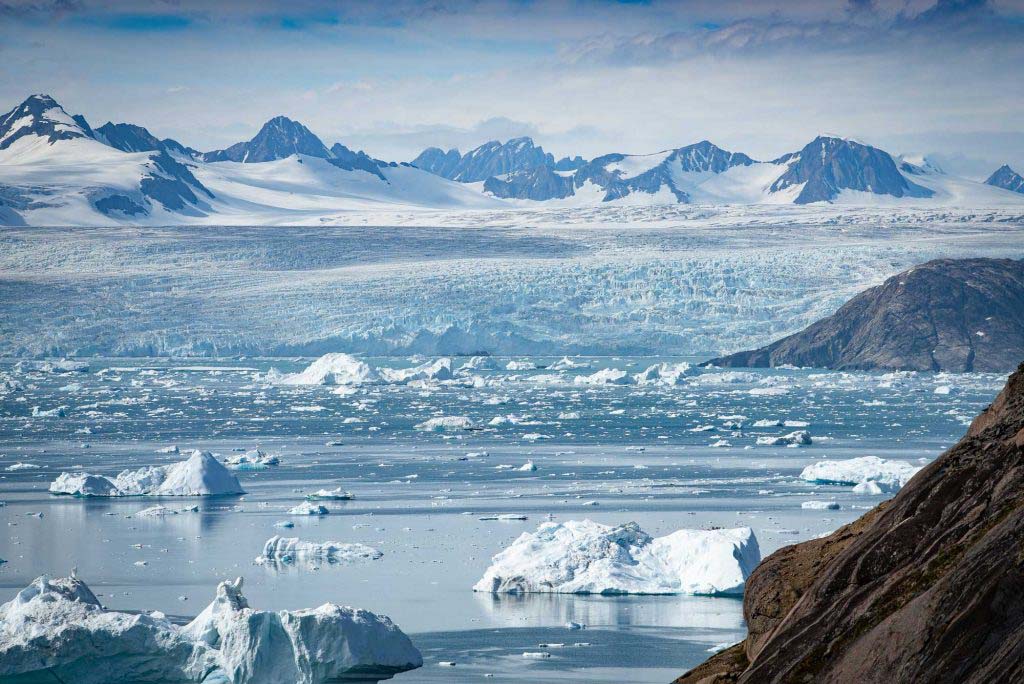
- Sail through massive fjords, witness colossal glaciers, and navigate among breathtaking icebergs, creating an awe-inspiring backdrop.
- Explore the world's largest fjord, Scoresby Sound, and visit Milne Land, where you can immerse yourself in the grandeur of nature.
- Experience the vibrant village of Ittoqqortoormiit and engage with the friendly locals, gaining insights into their unique way of life.
- Encounter whales and witness their majestic presence as they swim and dive in the surrounding waters.
- Immerse yourself in the profound beauty of the Arctic, following sustainable practices that respect the environment and cultural heritage.
- Meet like-minded travellers from around the world, forming lasting friendships and sharing unforgettable moments during this extraordinary sailing expedition.
Who The Trip Is For
- Sailing enthusiasts who want to experience the thrill of sailing across the Danish Strait. Connecting with nature's raw forces and embracing the spirit of oceanic adventure.
- Photographers will capture the awe-inspiring beauty of towering glaciers, expansive fjords, and majestic icebergs.
- Travellers who want to see the world in a sustainable way. The trip emphasises sustainability in every possible way, both on and off the boat.
- Those who embrace the flexibility of ocean travel. While we will attempt to reach as many destinations as possible, the final route will be determined during the trip depending on the weather conditions.
Itinerary: Iceland to Greenland – Glacier Explorer
As a sailing ship, we are largely dependent on the weather. We will attempt to reach as many destinations as possible under sail, however, the specified itinerary is simply a guide. With all tours as exciting as this, flexibility is important as the final route will be determined during the trip depending on the weather conditions.
Day 1: The trip starts in Ísafjörður
Meet at 14:00 on the harbour in Ísafjörður, on the northwest coast of Iceland. Start with getting to know fellow guests before going through the schedule for the week. Get to know the boat and the equipment and finish packing provisions and equipment. Life onboard requires cooperation, so before departure, go through routines and procedures onboard, for sailing and emergencies. Start sailing out of Isafjordur on this first evening.
Day 2 – 3: Across the Danish Strait from Iceland to Greenland
The first sea crossing stage is about 230 nautical miles and will take around 2 days, depending on the weather and the wind. Sail straight north from Iceland and aim for a bit south of the inlet to Scoresby Sound. During the crossing, truly feel the connection to nature, as there won’t be mobile coverage but just the raw forces of nature. The sea birds will follow you out to sea, and maybe be lucky enough to get a visit from some dolphins playing around the bow. Once Greenland’s steep coast is on the horizon, it will be exciting to see where landfall will be.
Day 4: Scoresby Sound, the world’s largest fjord
Quickly notice that everything in Greenland is huge. Just the entrance to this fjord is 27 kilometres wide, with a huge system of fjords and glaciers inside. After the experience of the crossing, it is nice to get into the fjord where there are generally calmer waters and weather. Start the journey into the fjord along the steep and glacier-clad southside and spend almost a full day here. Possibly get all the way to Hekla Harbor where the boat can anchor for a good night’s sleep.
Day 5 – 7: Around Milne Land
There are so many exciting places to visit once you arrive in Scoresby Sound. Here you can sail between icebergs as large as apartment blocks, huge glaciers that calve in the sea, and granite cliffs towering up to 2000 metres above sea level. Set course around the inland island Milne Land, and find places like Snesund, Øfjord, and Bjørneøene. Anchor up to allow for trips on land to explore. Have a campfire on the beach, or take the next 2 days to go on a hike.
Day 8: Ittoqqortoormiit
After some fulfilling days of exploring the inner parts of Scoresby Sound, set course east again, towards the inlet of the fjord. Here lies the east coast’s northernmost settlement, the village of Ittoqqortoormiit. There are more than 400 inhabitants here, all living in small wooden houses in the coolest colours. Arrive on the warmest days of the year, where the residents will spend most of their time outside and enjoying the sun before the tough winter returns.
Day 9 – 11: Back across the Danish Straight from Scoresby Sound to Ísafjörður
Leave the huge fjord massif of Scoresby on track to return to Iceland in good time. Along the way, expect to see more icebergs, but also whales that both sleep on the surface and swim and dive. Ísafjörður is a charming little port town where you will get the chance to rest both your bodies and souls: here, find both good swimming pools with both hot and cool water, as well as delicious restaurants and bars, to check out.
- Trip experience with a sailboat – experienced and locally familiar skipper/expedition leader on board
- Extra co-skipper and guide/crew onboard
- Our Comfort Package which consists of accommodation onboard in single bunks, with a ready-made bed (warm and nice duvets and pillows)!
- All the food we eat onboard during the trip
- Oilskins (jacket/pants) to borrow for everyone onboard.
- An environmentally friendly, local, sustainable, unique, exotic, and exclusive Norwegian adventure holiday.
- A shared experience and friendship with like-minded adventurers from around the world
- A lot of time outdoors – raw and honest nature experiences
- Use of our shared trip equipment: dinghy, kayaks, fishing equipment, etc.
- All boat-related expenses such as diesel, gas, harbour fees, etc.
- Personal safety equipment; Helly Hansen inflatable lifejacket
- Survival Suit and Search and Rescue insurance for everyone on board
- Teaching, advice, and guidance about boat life and sailing
- Travels to/from start/ending point
- Optional meals at cafés/restaurants
- Entrance to galleries, museums, and similar, or other alternative arrangements and activities that you/we may come up with along the way
- Drinks like wine, beer, or cider and other luxuries (yes, we drink beer and wine on board, bring your own)
- Travel/cancellation insurance – is recommended, but up to you
Experience Level
This is a sailing expedition where we will undertake multi-day sea crossings, which can be an incredibly wonderful and special experience! You do not need to have sailed before to be on board, and we are joined by both people who have never sailed before and experienced sailors. If you are a beginner, we want to make you a sailor as soon as possible, and if you are experienced, you will quickly get more responsibility and greater challenges. The group and crew will be divided into watch teams so that we can learn from each other and help each other out.
The boats we sail on our expeditions are large, robust, and sail well in the open seas. However, we do not control the weather, and we must be prepared for wind and potential heavy seas that we might encounter offshore. From light breezes to sailing in hard weather with several metres of swell, the proximity to the forces of nature on such an expedition is something most people find very unique and rewarding!
Safety and Risk
Safety is taken seriously on our trips, and staff are trained in handling different situations that can occur at sea. On board a boat and on trips, everyone must know what to do in potentially dangerous situations. It is important that as a guest and participant, you are trained quickly enough to be a participant – not a passenger. It contributes to learning, a sense of achievement, and increased safety for all. It’s also why our trips are considered to be sailing courses: you are trained to be one of the crew members on board. Feel free to contact us to discuss the risk.
Expedition
On our expedition trips, we often spend multiple days on sea-crossings, and we sail into areas far from people and with extra risk factors, such as sea ice and unreliable navigation charts. This requires our crew to have extra focus and awareness of the potential situations that might arise. We sail in these areas only in the most optimal seasons and use only our largest and most sturdy boats, which are both equipped and dimensioned to cope with this type of expedition sailing. We are fully aware that sailing is the safest and most accessible way to visit these very inaccessible places. However, sailing in general, and especially sailing in the Arctic and over the high seas, involves a certain risk that you must be willing to take. Feel free to contact us for a chat and guidance regarding risk.
Food and Cooking
On trips, you will be part of the crew onboard and get the chance to participate in all aspects of the running of the sailboat. This includes the cooking, where everyone is taking turns in the galley! Skippers and guides assist as much as they can along the way. Before the trip, set up a menu and purchase what is needed. Great menu options are offered, with healthy “boat-friendly” food. If you have allergies or preferences, let us know in the registration form and it will be taken into account. During the trip, possibly sail by a good restaurant or two to stop and eat at.
Accommodation
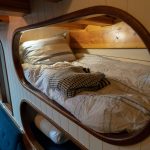
Accommodation on the boat is part of the fun. The accommodation is generally in shared cabins, some of which have a double bed and some of which have bunk beds. Figuring out who sleeps where can be a bit of a puzzle, but we do believe we’ve gotten quite good at it. Let us know if you have any special needs or reservations.
You must arrange any accommodation before and after the trip on your own. If you have any doubts about where to stay, we’re happy to give you some recommendations.
What We Expect From You
Guests are encouraged to take part in the routines onboard the sailboat, whether it is sailing, docking, navigating, looking for whales and icebergs, washing up, cooking, cleaning the boat, or contributing in other ways when required.
You will be split into a watch team, with the teams working in rotations of 4 hours on and 8 hours off, with a rotating system to make sure that the night shifts are divided equally among all watch teams.
Our trips require a little work from the participants – and you must be open to contribute and open up a bit socially. We have many different people with us on our trips, and most people get along very well. Our experience is that doing things with others out in nature, and not least doing things with new people with different personalities than one might be used to, is what creates the best, most interesting and memorable stories.
Life On Board
Life on board a sailboat is social and pleasant, but for some, it can be perceived as quite intimate and crowded, which one should be prepared for. On board, everyone participates in the operation of the sailboat and everyone is considered crew. We would like to get to know you well and hope that you will get to know everyone else on the boat as soon as possible. It requires some patience, generosity, and an open mind to thrive, but the new acquaintances and completely raw nature experiences will take your focus as soon as you become comfortable with life at sea.
We have plenty of heating and good food on the boat, but not always an abundance of fresh water. This means it will not be possible to shower every day, but more or less every other day when in a harbour or when sailing through a place with available showers. A morning swim in the sea is also available all year round!
Who You’ll Meet. How Many On Board?
Many come alone, some travel as couples, and others travel as a group of friends. The common denominator for everyone is that these are fun and interesting people you will become friends with almost no matter what. Sharing grand experiences creates strong ties! Many people wonder about the age composition of our trips, but this isn’t so important to us. It doesn’t matter if you are young or old as long as you want to go on a trip and intend to do your part in making this a great trip for everyone. The number of participants varies from trip to trip. If we have many participants, we will expand with more boats and skippers.
Environment and Sustainability
In general, sailing is an environmentally friendly activity, with skippers sailing as much as possible and using the engine as little as possible. Crew and participants are encouraged to travel as environmentally friendly as possible, and local ingredients and resources are used as much as possible.
We believe that sailing is an exercise in sustainability: we move with the wind and we have limitations on things like water, diesel, electricity and food. To run sustainably, knowledge, patience, flexibility, and hard work are required. The same can be said about many other things that one tries to do in a sustainable way.
Fly to Ísafjörður Airport from Reykjavik Airport (domestic). Drive from Reykjavik north on the Ring Road, then onto Route 60. Ferry from Denmark via the Faroe Islands.
Fly from Ísafjörður Airport to Reykjavik Airport (domestic). Drive to Reykjavik south on Route 60 then onto the Ring Road. Ferry to Denmark via the Faroe Islands.
Itinerary: Iceland to Greenland – Glacier Explorer
As a sailing ship, we are largely dependent on the weather. We will attempt to reach as many destinations as possible under sail, however, the specified itinerary is simply a guide. With all tours as exciting as this, flexibility is important as the final route will be determined during the trip depending on the weather conditions.
Day 1: The trip starts in Ísafjörður
Meet at 14:00 on the harbour in Ísafjörður, on the northwest coast of Iceland. Start with getting to know fellow guests before going through the schedule for the week. Get to know the boat and the equipment and finish packing provisions and equipment. Life onboard requires cooperation, so before departure, go through routines and procedures onboard, for sailing and emergencies. Start sailing out of Isafjordur on this first evening.
Day 2 – 3: Across the Danish Strait from Iceland to Greenland
The first sea crossing stage is about 230 nautical miles and will take around 2 days, depending on the weather and the wind. Sail straight north from Iceland and aim for a bit south of the inlet to Scoresby Sound. During the crossing, truly feel the connection to nature, as there won’t be mobile coverage but just the raw forces of nature. The sea birds will follow you out to sea, and maybe be lucky enough to get a visit from some dolphins playing around the bow. Once Greenland’s steep coast is on the horizon, it will be exciting to see where landfall will be.
Day 4: Scoresby Sound, the world’s largest fjord
Quickly notice that everything in Greenland is huge. Just the entrance to this fjord is 27 kilometres wide, with a huge system of fjords and glaciers inside. After the experience of the crossing, it is nice to get into the fjord where there are generally calmer waters and weather. Start the journey into the fjord along the steep and glacier-clad southside and spend almost a full day here. Possibly get all the way to Hekla Harbor where the boat can anchor for a good night’s sleep.
Day 5 – 7: Around Milne Land
There are so many exciting places to visit once you arrive in Scoresby Sound. Here you can sail between icebergs as large as apartment blocks, huge glaciers that calve in the sea, and granite cliffs towering up to 2000 metres above sea level. Set course around the inland island Milne Land, and find places like Snesund, Øfjord, and Bjørneøene. Anchor up to allow for trips on land to explore. Have a campfire on the beach, or take the next 2 days to go on a hike.
Day 8: Ittoqqortoormiit
After some fulfilling days of exploring the inner parts of Scoresby Sound, set course east again, towards the inlet of the fjord. Here lies the east coast’s northernmost settlement, the village of Ittoqqortoormiit. There are more than 400 inhabitants here, all living in small wooden houses in the coolest colours. Arrive on the warmest days of the year, where the residents will spend most of their time outside and enjoying the sun before the tough winter returns.
Day 9 – 11: Back across the Danish Straight from Scoresby Sound to Ísafjörður
Leave the huge fjord massif of Scoresby on track to return to Iceland in good time. Along the way, expect to see more icebergs, but also whales that both sleep on the surface and swim and dive. Ísafjörður is a charming little port town where you will get the chance to rest both your bodies and souls: here, find both good swimming pools with both hot and cool water, as well as delicious restaurants and bars, to check out.
As with all activities, there is plenty of specialised equipment and clothing for sailing. You are not expected to buy lots of new equipment to join any of our trips, so, use what you have, borrow what you need from a friend, try to purchase used equipment, and if you have to invest in new equipment – buy quality items that will last. What you need is something waterproof and windproof on the outside, and layered clothing underneath.
Some jackets may not be waterproof enough, or might not perform well in saltwater, so you might want to consider purchasing or renting a set of “oilskins” to use on the wettest days. Even in summer, it can be cold at sea, so bring both swimwear and warm clothing.
You will receive a detailed recommended packing list in good time before departure.
Packing
- Pack like a sailor; in a soft bag or backpack, NOT in a rigid suitcase
- Pack as little as possible, but bring what you need!
- The fewer items you bring, the faster you sail, and the less time you spend fooling around with your gear
Adventure-wear
- Woollen underwear – shirt and long johns/zip longs (bring two pairs so you have spare)
- Woollen socks (multiple pairs) and woollen soles (bring two pairs so you have spare)
- Woollen scarf/buff/high neck and hat (preferably warm and windproof)
- Mittens or gloves preferably with wind or water-resistant covers
- Woollen sweater, preferably a turtle-neck
- Warm pants, preferably multi-layered with warmer materials. (For use on the deck or while sailing)
- Warm winter jacket – down jacket or preferably Primaloft (as they can handle water)
- “Shore” clothing for exploring towns
- Sea/sailing/rain/rubber boots, preferably winter-style. Bring some big enough so that they breathe even with woollen socks and woollen soles
- Light shoes/sandals/crocs that breathe well. (For use indoors and on deck in nice weather)
- Trainers/deck shoes (no black-soled shoes please – they mark the deck)
- Sailwear/oilskin – jacket and pants (we rent out/sell good quality oilskins at reasonable prices, see separate information)
- Sailing gloves (not a must) and here you can also use skiing gloves or rubber/fishing gloves with wool liners
Other equipment
- Sunglasses (polarised lenses are ideal, but not essential)
- Sunscreen (water-resistant, SPF 30 or higher)
- Water bottle(s), minimum 0,75 – 1 litre, hydration reservoir (Camelbak)
- Small washing cloth and soap
- Towel and swimming gear
- Flask (insulated bottle) for hot water
- A head torch (preferably one with a dimming function/red (night) light)
- Walking boots, shoes for onshore, and trainers with good grip
- Sea sickness and personal medication
- Camera
- We have enough life vests for everyone, but if you have a vest of your own that you want to use, then bring it! Make sure to unscrew the gas cylinder before checking in your bag at the airport
Electronics
- Onboard the boats there are USB (USB-B ‘regular’ USB, no USB-C) outlets for charging phones when we sail. 220V outlets are available when we’re docked
- We have cellular coverage most of the time in Mainland Norway
Note: This is a recommended packing list